Build & AI
SaaS is dead
I built a product management system during a workshop — from phone photos of Excel and PowerPoint on the TV.
Yesterday I sat in a workshop. The topic was product management systems. On the screen: Excel tables, Word docs, PowerPoint slides. The usual corporate toolkit.
Instead of taking notes, I took photos. With my phone. Of the TV.
Then I vibe-coded the entire system — live, in the same room — using those shots and my understanding of this class of software. Requirements that had been scattered across spreadsheets and decks became a single, working application.
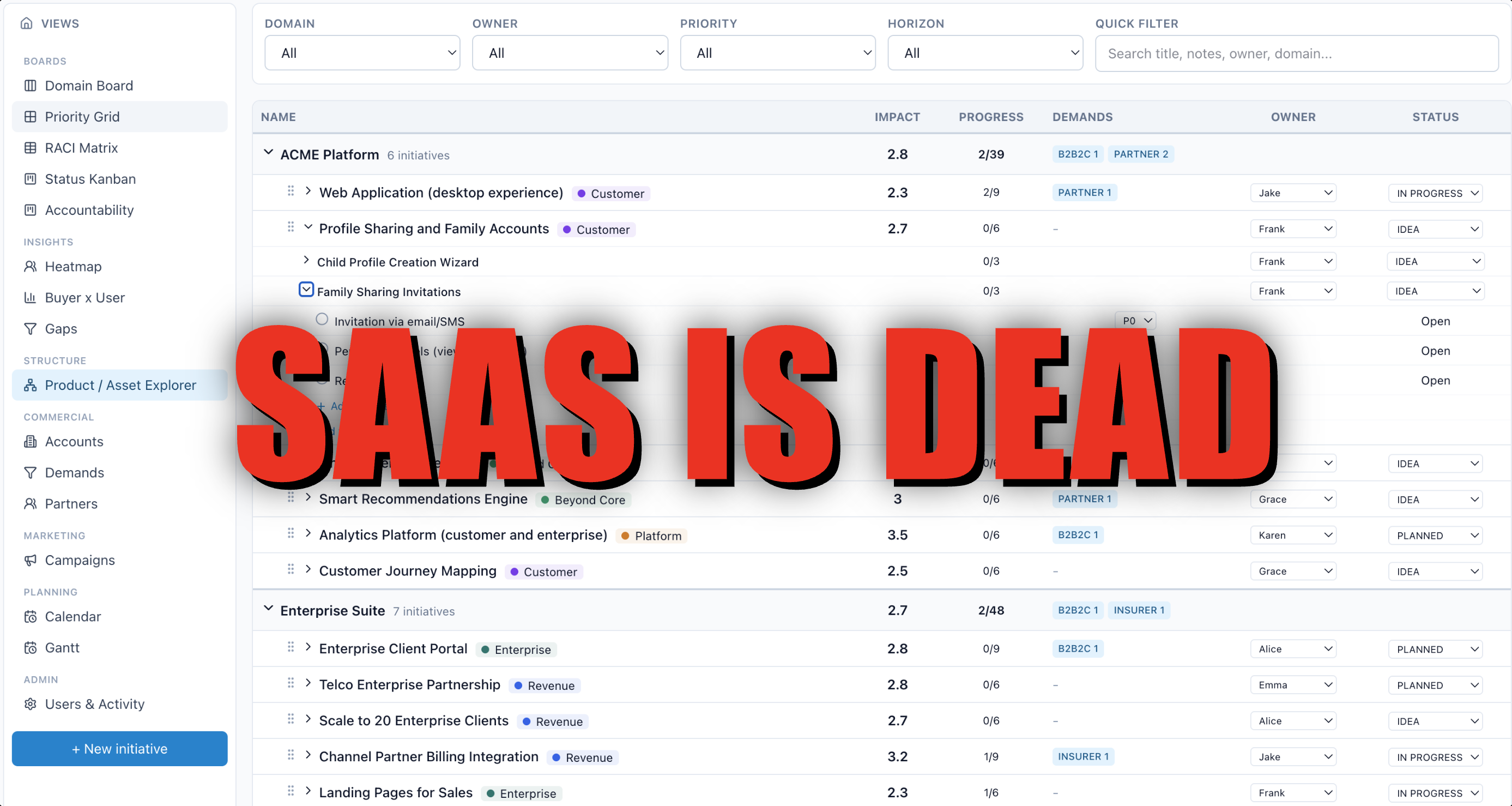
The system, a few hours later: production-ready.
After the workshop I spent about four hours on polish, stabilization, and security. No procurement. No vendor calls. No “we’ll get back to you in Q3.”
The time to build software is now shorter than the time to order it.
That’s not a pitch for doing everything in-house. It’s a fact about the new default: when you can go from “photos of the problem” to “deployable solution” in a day, the old playbook — RFP, evaluation, contract, rollout — starts to look like the slow path. SaaS was the answer to “we can’t build it ourselves.” Now, for a growing set of problems, we can.
What changed? AI that understands screenshots, spreadsheets, and natural language. You don’t need to be a developer to specify; you don’t need a big team to ship.
What stays? Clarity of scope, security, and the discipline to iterate. The hagenthon mindset: time-box, ship, then refine.
SaaS isn’t literally dead. But its role is shifting. The question is no longer “build or buy?” It’s “how fast can we build something good enough — and when does buying still make sense?” For many internal tools and workflows, the answer is already: build first.
This is how I build. If you want to explore what’s possible in a workshop or a sprint, get in touch.